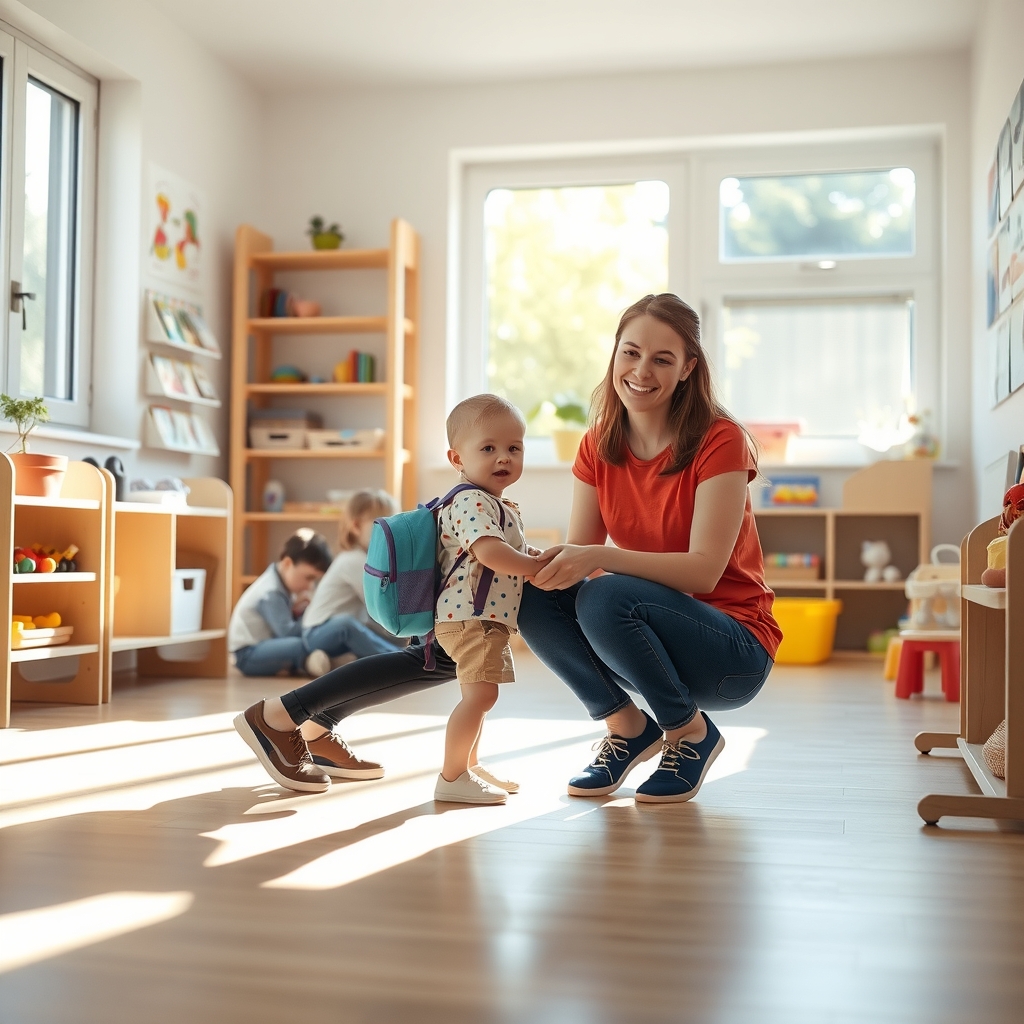
Parents in Slovenia have four main childcare options for pre-school children: a public or private kindergarten (vrtec), a registered home childminder (varuh predšolskih otrok), a private babysitter and help from grandparents. Most families choose a kindergarten, where a child can be enrolled from the age of 11 months, and the fee depends on household income, ranging from 0 to 77 percent of the programme price. When a child falls ill, one parent can stay at home and receive wage compensation for childcare.
What types of childcare are available in Slovenia
The right choice depends on your child’s age, your working hours, your budget and whether grandparents live nearby. Many families combine options: kindergarten in the morning, grandma in the afternoon, and one parent at home when the child is ill.
| Type of care | Provided by | Cost for parents | Best for |
|---|---|---|---|
| Public kindergarten or private kindergarten with a concession | qualified pre-school teachers | 0–77% of the programme price, based on income | regular full-day care from 11 months |
| Registered childminder | a childminder in their own home, up to 6 children | by agreement, partly co-funded by the municipality | when no kindergarten place is free or you want a smaller group |
| Private babysitter | a person who comes to your home | paid entirely by you | occasional care, evenings, shift work |
| Grandparents and relatives | family | usually free | flexible care, help during illness and holidays |
Kindergarten: enrolment, waiting lists and vacancies
A child can be enrolled in kindergarten once they turn 11 months old, provided neither parent is still on parental leave in the form of full absence from work. Enrolment is possible at any time of the year; you apply at the chosen kindergarten or through the Vpis otroka v vrtec service on the e-uprava portal.
Kindergartens must publish how many places they offer, how many are vacant and the expected waiting time. The ministry responsible for education runs the Prosta mesta portal, which shows the situation in public and private kindergartens by municipality. Tips for an easier enrolment:
- apply to several kindergartens at once if your municipality allows it;
- look at private kindergartens with a concession too, as the same fees apply as in public ones;
- apply a few months before your parental leave ends, since most places become free in September;
- if you are on a waiting list, keep checking and tell the kindergarten about any changes.
How much kindergarten costs and how to pay less
The programme price is set by each municipality and varies considerably. In the municipality of Žalec, for example, from 1 April 2026 the full-day programme costs €830.15 a month for the first age group and €637.34 for the second. Parents pay only part of this price; the municipality and the state cover the rest.
The parents’ share depends on the average monthly income per family member. The following brackets apply for 2026:
| Income per person (€ per month) | Parents pay |
|---|---|
| up to 241.49 | 0% |
| 241.50–402.50 | 10% |
| 402.51–483.01 | 20% |
| 483.02–563.50 | 30% |
| 563.51–711.12 | 35% |
| 711.13–858.67 | 43% |
| 858.68–1,100.20 | 53% |
| 1,100.21–1,328.28 | 66% |
| over 1,328.28 | 77% |
To get the reduced fee you must apply, for example through the Subvencija za znižano plačilo vrtca service on e-uprava. If you pay income tax in Slovenia but do not apply, you pay the top share of 77 percent. Parents who are not liable for income tax in Slovenia pay the full price. Details are on the GOV.SI page on reduced kindergarten fees (in Slovenian).
Discounts for siblings
If two children from the same family attend kindergarten at the same time, parents pay nothing for the younger one. For the third and every further child, parents are exempt from payment whether or not the child attends together with siblings. Many municipalities also let you reserve a place during a longer summer absence; each municipality sets its own conditions.
Registered childminders and private babysitters
A registered childminder is the official form of home-based childcare. They must be entered in the register kept by the ministry responsible for education and may care for up to six children in their home. They need completed secondary vocational or general education plus an additional vocational qualification, or must meet the requirements for kindergarten staff. The play area must be separate from the family’s living space.
For a child on a public kindergarten waiting list, the childminder receives co-funding of 20 percent of the programme price from the municipality where the parents have permanent residence. Before deciding, ask about the registration, daily routine, meals and who looks after the children if the childminder is ill.
A private babysitter is best for occasional care, evening commitments or shift work. The price is a matter of agreement, so agree in writing on hours, pay, notice period and what happens when the child is sick. Ask other parents for recommendations and meet the babysitter first while you are at home too.
When your child is ill: compensation for childcare leave
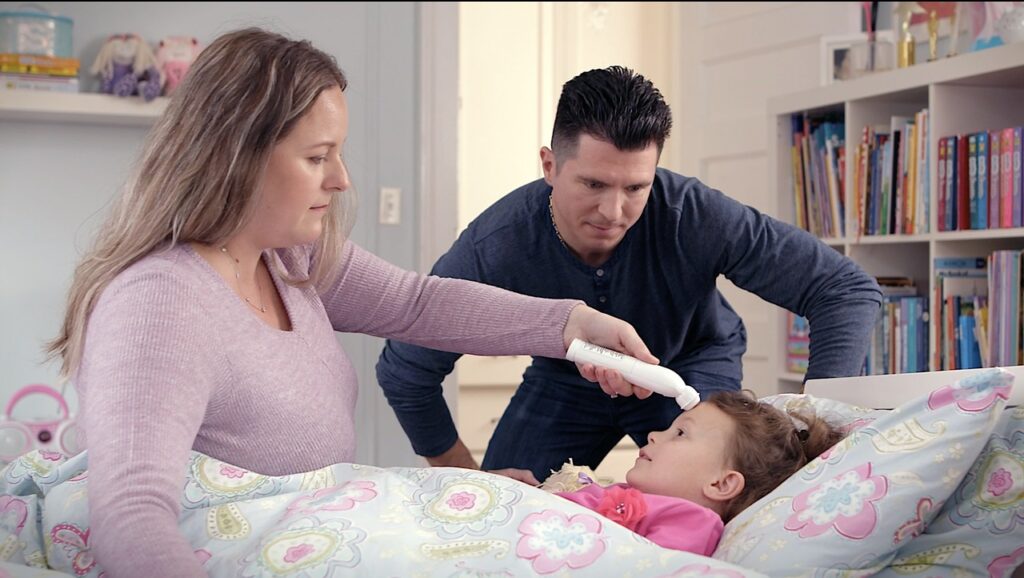
A sick child should not go to kindergarten, so someone has to stay at home. Employed parents in Slovenia can take leave to care for a sick child, approved by the child’s chosen paediatrician or school doctor. The main rules:
- for a child under 7, the doctor can approve up to 20 calendar days per episode, and a designated doctor or commission can extend this to 40 days in total;
- for a child aged 7 or older, up to 10 days are available, extendable to 20 days in total;
- compensation is 80 percent of the calculation base and is paid by compulsory health insurance (ZZZS) from the first day;
- both parents cannot be absent for the same child at the same time, but they can split a day, for example four hours each;
- there is no entitlement if the other parent is not working and can provide care, or if it is only about supervising a healthy child.
Grandparents, holidays and school-age children
For many families grandparents are irreplaceable, but clear arrangements help here too. Agree which days they look after the grandchildren and do not leave them with the entire holidays. Once a child starts school, the challenge shifts to early mornings, afternoons and the summer holidays, which in Slovenia last about ten weeks. Primary schools organise morning care and after-school care, and municipalities and associations often co-fund summer camps, workshops and courses. Registration usually opens in spring, so plan your summer early.
Frequently asked questions
At what age can I enrol my child in kindergarten in Slovenia?
You can enrol your child once they turn 11 months old, provided neither parent is still on parental leave in the form of full absence from work. Enrolment is possible at any time of the year.
How much do I pay for kindergarten if I do not apply for the reduced fee?
If you pay income tax in Slovenia and do not apply, you pay the top share, which is 77 percent of the programme price in your municipality.
Do I pay for a second child in kindergarten?
No. When two children from the same family attend kindergarten at the same time, you pay nothing for the younger one, and you are always exempt for the third and every further child.
What can I do if there is no kindergarten place available?
Check the Prosta mesta portal and private kindergartens with a concession, and join the waiting list. In the meantime, a registered childminder is a good solution, partly co-funded by the municipality for children on the waiting list.
How many days can I stay at home with a sick child?
For a child under 7, the doctor can approve up to 20 days per episode, extendable to 40 days in total. For an older child, up to 10 days are available, extendable to 20. Compensation is 80 percent of the calculation base.