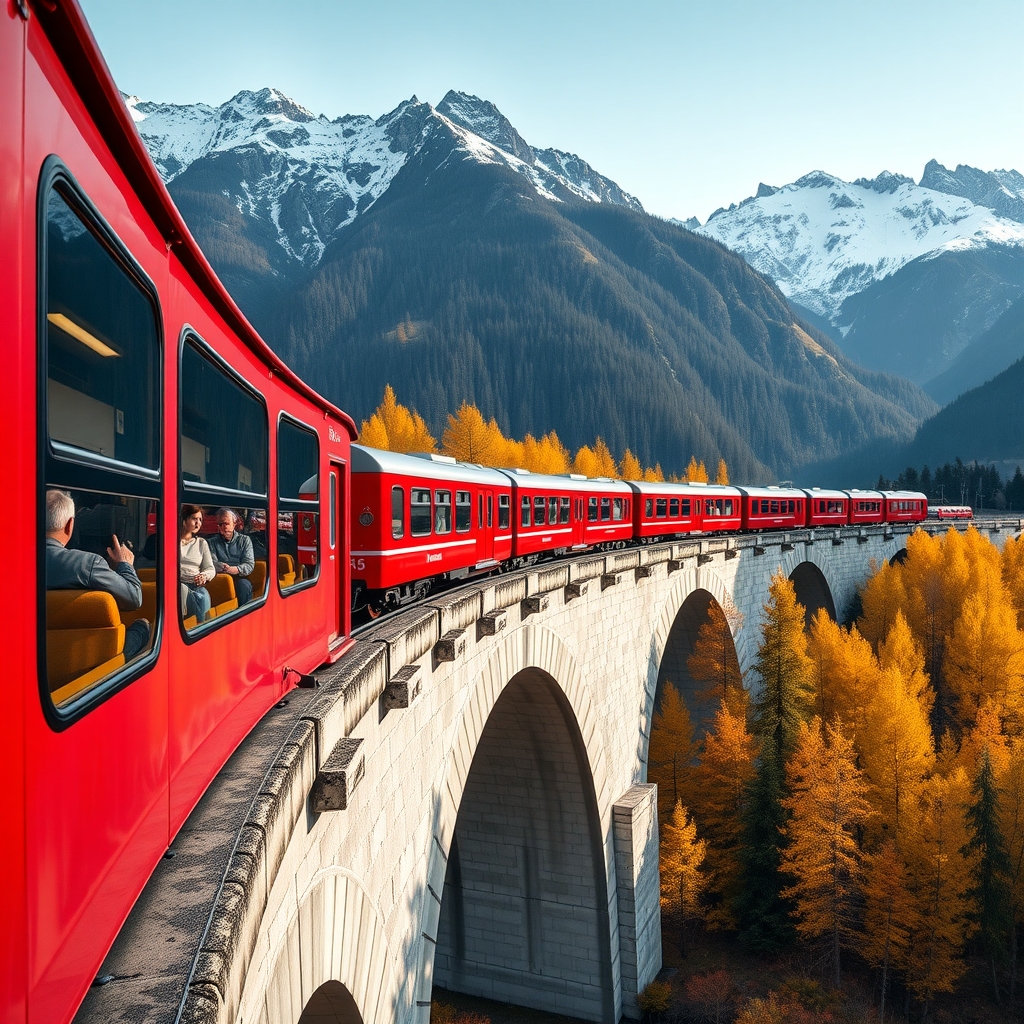
The most scenic train journeys in Europe cross the Swiss Alps, the Norwegian mountain plateau, the Italian coast and the vineyards of Portugal – and one of them starts in Jesenice, in Slovenia. Below are the routes that guidebooks and travel media keep naming as Europe’s finest, with key facts on journey times and tips on combining them into a trip that starts in Slovenia.
Why travel by train
A train takes you through scenery you miss from the motorway or a plane window: gorges, viaducts, villages with no road access. There is no queue at airport security, stations are mostly in city centres, and on board you can read, eat or work. Many travellers also value the smaller carbon footprint compared with flying.
Trains have their downsides too. Panoramic trains are expensive, some lines have only a few departures a day, and popular services sell out quickly in summer. Planning ahead pays off.
The finest lines in the Alps
Glacier Express (Switzerland)
The train between Zermatt and St. Moritz covers 291 kilometres in almost eight hours, crossing 291 bridges and passing through 91 tunnels. Its highest point lies at 2,033 metres. The nickname “the slowest express train in the world” is no exaggeration – slowness is the point, as the panoramic carriages open up views of glaciers and Alpine villages.
Bernina Express (Switzerland–Italy)
The line from Chur to Tirano is 123 kilometres long, has 196 bridges and 55 tunnels, and is a UNESCO World Heritage Site. In a few hours you descend from glaciers to palm trees and the Italian Valtellina valley, one of the most dramatic transitions in Europe.
Bohinj Railway (Slovenia)
The line between Jesenice and Nova Gorica was built between 1900 and 1906 as part of the Habsburg link to Trieste. It runs through the Bohinj tunnel, more than six kilometres long, and over the Solkan bridge, whose 85-metre stone arch spans the emerald Soča river. Lonely Planet named it among the world’s most beautiful train journeys; the ride takes about two hours.
Northern Europe: fjords and the Arctic Circle
The Bergen Line (Bergensbanen) links Oslo and Bergen in about six and a half hours, with four departures a day. It crosses the Hardangervidda plateau, where snow often lingers into late spring. Sweden’s Inlandsbanan runs 1,288 kilometres from Kristinehamn to Gällivare and crosses the Arctic Circle; it operates mainly in summer.
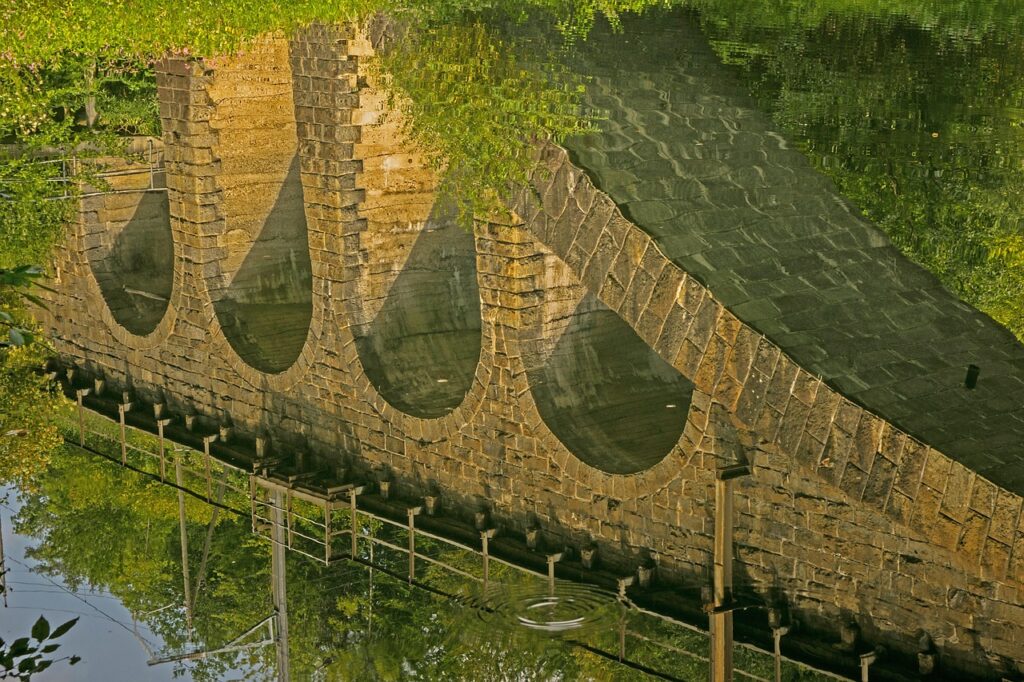
For a short taster, try the ride across the Øresund Bridge between Copenhagen and Malmö, which takes around 45 minutes. The bridge opened in 2000 and carries separate rail and motorway links.
By the sea and through the vineyards
- Cinque Terre (Italy): the regional train between La Spezia and Levanto links five villages in 18 kilometres: Riomaggiore, Manarola, Corniglia, Vernazza and Monterosso. A regional ticket is cheaper than the tourist boats.
- Linha do Douro (Portugal): the 160-kilometre line from Porto past Peso da Régua follows the river between terraced vineyards; the finest stretch comes towards the end of the line.
- Cannes–Menton (France): a short coastal ride along the Côte d’Azur, also included by Lonely Planet among the most beautiful.
- Diakofto–Kalavryta (Greece): a narrow-gauge railway from 1896 in the northern Peloponnese, 22.5 kilometres long, running past waterfalls and through a deep gorge.
In Britain, the Caledonian Sleeper night train from London to Fort William in the Scottish Highlands is a special experience; it ends near Ben Nevis, the highest mountain in the UK.
Selected routes compared
| Route | Country | Duration or length | Highlight |
|---|---|---|---|
| Glacier Express | Switzerland | almost 8 hours, 291 km | 291 bridges, 91 tunnels |
| Bernina Express | Switzerland, Italy | 123 km | UNESCO World Heritage |
| Bergen Line | Norway | about 6.5 hours | Hardangervidda plateau |
| Bohinj Railway | Slovenia | about 2 hours | Solkan bridge |
| Linha do Douro | Portugal | 160 km | riverside vineyards |
| Cinque Terre | Italy | 18 km | five coastal villages |
Setting off by train from Slovenia
A direct train runs daily from Ljubljana along the Southern Railway to Trieste, a line CNN named among Europe’s most beautiful: the EuroCity Emona between Vienna and Trieste follows the Sava valley and crosses the Karst. Regular trains run to Zagreb, and Munich is reached via Villach and Salzburg. The Nightjet sleeper from Bratislava to Split stops in Maribor and Celje, and in summer a Warsaw–Rijeka train calls at Ljubljana.
- Choose your ticket. For one or two routes, point-to-point tickets are often cheaper. For a trip of several weeks, Interrail is the better fit: since 1972 it has offered unlimited travel on the railways of 33 European countries, and it is no longer just for the young – travellers over 60 buy it too.
- Book panoramic trains. On the Glacier Express and Bernina Express a seat reservation is compulsory and costs extra even with Interrail; in summer book a few weeks ahead.
- Check the timetable. International connections change because of engineering works; up-to-date information is collected on the Interrail page on trains in Slovenia.
- Pick the right season. Alpine lines are at their best from June to October or in winter snow, coastal ones in spring and autumn when crowds are thinner.
Eighteen-year-olds can also try their luck with the EU’s DiscoverEU programme, which awards free travel passes by lottery.
Frequently asked questions
What is the most scenic train journey in Europe?
The names that come up most often are the Glacier Express and Bernina Express in Switzerland, the Bergen Line between Oslo and Bergen and the line through the Cinque Terre. Closer to Slovenia, the Bohinj Railway between Jesenice and Nova Gorica was listed by Lonely Planet among the most beautiful train journeys in the world.
Do I need a reservation for panoramic trains?
Yes for the Glacier Express and Bernina Express: seats must be booked in advance and the reservation paid for, even with an Interrail pass. Ordinary regional trains, such as those through the Cinque Terre, need no reservation.
Is Interrail only for young people?
No. Interrail has existed since 1972 and was originally aimed at travellers under 26, but today anyone can buy it, with special prices for youths and for travellers over 60.
How do I get from Slovenia to Switzerland or Germany by train?
Trains to Munich run from Ljubljana via Villach and Salzburg. The Zurich–Zagreb train crosses Slovenia with stops in Dobova, Krško, Celje and Maribor, but not Ljubljana. Check the current timetable before you go, as engineering works change it.