
When you are wondering which smartphone to buy, start with how you use your phone, not with the brand. For most people, long software support, a dependable battery, enough storage and good durability matter more than the fastest chip. Since June 2025, a new EU label on every new phone sold in the European Union makes comparing models much easier.
1. Usage first, brand second
A phone that is perfect for a keen photographer can be too complicated and too expensive for an older relative. Before you open any online shop, be honest about what you actually do with your phone every day.
- Calls, messaging, banking and maps: a solid mid-range or entry-level phone is plenty.
- Lots of photos, especially of children and at night: pay extra for a better camera and image stabilisation.
- Gaming and video editing: you need a more powerful processor and more RAM.
- A phone for a child or a parent: toughness, simplicity and long support beat raw performance.
Once you have named the three features that truly matter to you, it becomes much easier to ignore everything else the adverts try to sell.
2. How much to spend: price tiers
Prices change quickly, but the rough tiers stay much the same. The table below is a guide, not a price list; the figures reflect the market in Slovenia and the wider EU.
| Tier | Approximate price | Best for |
|---|---|---|
| Entry-level | up to about €200 | calls, messaging, apps, children, a spare phone |
| Mid-range | about €200–500 | most users, the best value for money |
| Upper mid-range | about €500–800 | better camera, faster charging, nicer screen |
| Flagship | over €800 | demanding photographers, gamers, anyone who wants the best |
If you are hunting for the cheapest smartphone, be wary of models with very little storage and short support: after two years they become slow and unsafe because they no longer receive security patches. A discounted mid-range model from last year is often a better buy than this year’s cheapest phone.
3. Updates and battery: what the new EU label tells you
Since 20 June 2025, smartphones placed on the EU market must carry an energy label and meet ecodesign requirements. The label shows:
- an energy efficiency class from A to G,
- battery endurance per charge (in hours and minutes),
- the number of charge cycles before the battery drops to 80% of its capacity,
- a repeated-drop reliability class (A to E),
- a repairability class (A to E),
- the IP rating for dust and water protection,
- a QR code linking to the EU’s EPREL product database.
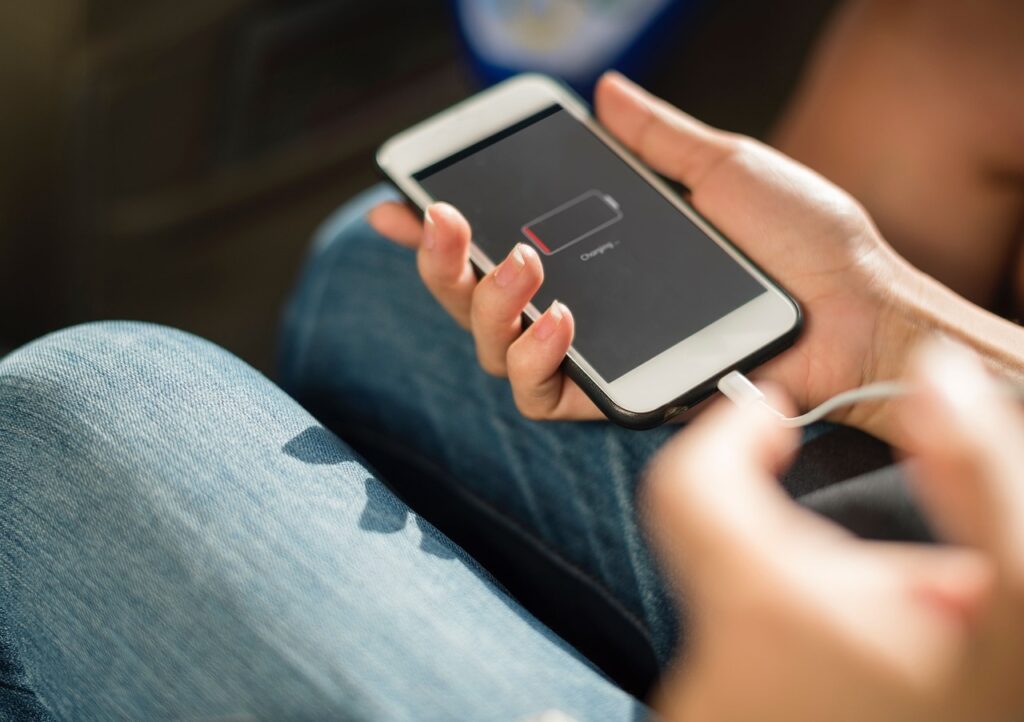
The rules also require batteries to last at least 800 charge cycles while keeping at least 80% of their original capacity, operating system upgrades to be available for at least five years after the last unit of a model is placed on the market, and critical spare parts to remain available for seven years after sales end. You can read the details on the European Commission’s page on energy labels for smartphones.
In practice, do not judge a battery by its mAh figure alone; look at the endurance time and the cycle count on the label. For models that have been on sale for a while, check how many years of updates the manufacturer promises and subtract how long the phone has already been on the market.
4. Storage, screen and camera
How much storage
For most users, 128 GB is a sensible minimum today, and you cannot add more later if the phone has no memory card slot. If you record a lot of video or keep a large photo library without a cloud backup, go for 256 GB. RAM affects how smoothly the phone switches between apps; on Android, 8 GB is a comfortable choice.
Screen and size
OLED/AMOLED screens offer deeper blacks and look better for watching content, while a higher refresh rate (90 or 120 Hz) makes scrolling feel smoother. If you have smaller hands or carry your phone in a pocket, hold it in a shop before buying – the difference between 6.1 and 6.7 inches is significant in the hand.
Camera
The megapixel count is a poor measure of quality. Optical stabilisation and image processing matter more. Compare photos taken at night and indoors, where the differences show most clearly.
5. A durable phone: IP rating and toughness
A water- and dust-resistant smartphone is identified by its IP rating. The first digit refers to dust protection (6 is the highest), the second to water. IP67 means the phone can survive immersion up to one metre for 30 minutes; with IP68 the manufacturer specifies stricter conditions. Protection can weaken with age and after repairs, so never submerge your phone deliberately. For children, outdoor work or hiking, also check the drop reliability class on the EU label and add a protective case and screen protector.
6. From your operator or bought outright?
Slovenian mobile operators let you buy a phone at a discount or in instalments, usually in exchange for a 24-month contract. When comparing operators, the main differences are the plan price, how much data you get when roaming in the EU, and coverage where you live and work.

- Add everything up: the phone price, the monthly fee multiplied by the number of months, and any activation charges.
- Compare that with buying the phone from a shop and choosing a cheaper SIM-only or prepaid plan.
- Check what early termination would cost. The Slovenian Consumers’ Association (ZPS) warns that if you leave early, you may be charged the device’s regular price rather than the promotional one.
- With smaller operators, check whose network they use – coverage is then identical, but the price may be lower.
You keep your number when you switch operator, and porting it is free of charge for the customer.
7. After you buy: apps and settings
Bad habits can spoil a good phone. Install smartphone apps only from the official stores (Google Play, App Store), switch on automatic updates, biometric lock and photo backup. If you sell or give away your old phone, reset it to factory settings first and sign out of your Google account or Apple ID.
Frequently asked questions
How much does a good smartphone cost?
For most people a good mid-range phone is enough, at roughly €200 to €500. Paying more mainly buys a better camera, screen and performance.
Is it better to buy a phone from a mobile operator or separately?
Add up the total cost over the contract period and compare it with buying the phone outright plus a cheaper plan. The operator deal only pays off if the total is lower and the lock-in does not bother you.
How much storage do I need on my phone?
For everyday use 128 GB of storage is enough; if you shoot lots of video and photos, go for 256 GB. On Android, 8 GB of RAM is a comfortable choice.
What does IP68 mean?
The phone is fully dust-tight and survives immersion in water under conditions stated by the manufacturer, which are stricter than for IP67. The protection weakens over time, so do not test it on purpose.
How long will a phone get updates?
For models placed on the EU market from 20 June 2025, operating system upgrades must be available for at least five years after the model stops being placed on the market. For older models, check the manufacturer’s promise.